
Wednesday, June 2, 2010

Wednesday, March 31, 2010
Q3-Q4 outside reading blog #5

For my research I think that I will focus primarily on intent. My research inquiry will be along the lines of: what is Hosseini’s intent in both selections and why? I already have my own ideas about this inquiry and I have read some criticism that is similar to my ideas about the author’s intent. I also feel that there are quite a few quotes from the text that I could use. Also the author’s life also plays a large role in the intent in his writing. The topic of his intent has many angles. First of all he was born in Afghanistan and thus has experience of his country that is very different than the media’s depiction. A plausible intent that could easily be interpreted is that he uses his writing to show how his countrymen are not all like the extremists that have ruled for so long. Another intent is to show the devastation that the Taliban have wreaked. In both selections he shows the atrocities that have become a sad part of everyday life. For example the Taliban’s treatment of women, the man selling his fake leg to feed his family, the hunger, the new severe laws and the contrasting descriptions of Kabul. Other intents are: the ethnic problems in Afghanistan, the treatment of women, occupation of countries and the importance of education. My research will explore the authors intent, the way that intent is expressed and the authors personal motives for having that intent.
Monday, March 22, 2010
Q3-Q4 outside reading blog #4
Khaled Hosseini’s true holly wood story:
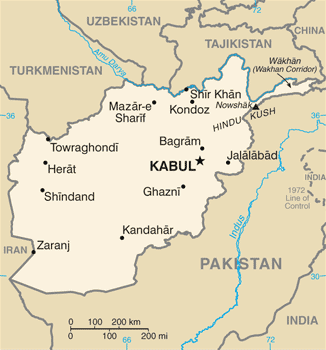
Hosseini was born in Afghanistan in 1965. He was the oldest of 5 children. His father was a diplomat and his mother was a Farsi professor. He grew up in a pretty modern part of Kabul, the capital of Afghanistan. As a child he spent time kite flying, watching Indian films, reading, and writing stories. In his experience living in the modern part of Kabul, women and men were more or less equal. Also during his time in Kabul he was influenced by many Afghan stories.
When Hosseini was still young, his family moved to Tehran, Iran where his father would be stationed. In Iran Hossienies eyes were to be opened wider into his countries problems. One of the families servants the cook was a Hazara, a badly mistreated minority ethnic group in Afghanistan. Because he was a Hazara he had never learned to read or write. After a year Hosseini had taught the man to read and write and had discovered the terrible discrimination that is rampant across Afghanistan.
When the Hosseinies left Iran they then went to Paris, after the monarchy ended and the republic was created. However the republic was short lived because when communists tried to take the state by force which eventually resulted in a soviet invasion and occupation. Because of the soviets the Hosseinies applied for political asylum and came to America.
The family lived in San Jose where Hosseini’s father got off welfare and became a driving instructor. Hosseini learned English and fueled his love of reading with many American works like John Steinbeck’s Grapes of Wrath . He wanted to succed in the America so he became a doctor. When the US began their intervention in Afghanistan and overthrew the Taliban Hosseini now a full doctor decided to start working on what would become The Kite Runner. Because Hosseini was a full time doctor the book initially got very litte publicity but as word spread by word of mouth, the book went on the New York Times bestsellar list.
Hosseini’s life seems to be one the mold to the basic plot points. Although he is not Amir and they both had very different lives the timing of events is similar both lived in the same part of Kabul, both did not mistreat Hazara’s, both liked the same things growing up, both went to America because of the soviet invasion, both lived in the bay area (or near it) and both married and had successful carreers in America. These simularities are very interesting to consider when looking at plot.
Works Cited
"Khaled Hosseini Biography -- Academy of Achievement." Academy of Achievement Main Menu. Web. 23 Mar. 2010.
Monday, March 15, 2010
Q3-Q4 outside reading blog #3

In A Thousand Splendid Suns by Khaled Hosseini, there are some themes that are similar to the kite runner. One of them is a father forced to be ashamed of their child. In the book Mariam one of the main characters is asked by her father what she would like for her birthday. Mariam decides that she wants to see a cartoon (Pinocchio). This is immediately considered a bad idea. “Later at the stream, Mariam said, ‘take me.’
‘I’ll tell you what,’ Jalil said. ‘I’ll send someone to pick you up and take you. I’ll make sure they get you a good seat and all the candy you want.’
‘Nay. I want you to take me.’
‘Mariam Jo— ’
‘And I want you to invite my brothers and sisters too. I want to meet them. I want us to all go, together. It’s what I want.’ Jalil sighed. He was looking away toward the mountains”(25).
This passage illustrates fathers forced to be ashamed of their children. When Jalil says ‘I’ll send someone to pick you up and take you’(25). it is clear that the author is showing us that Jalil loves his daughter but loves his reputation more. It is also apparent that there isn’t any other reason because he does not mention business or the movie being too expensive, he just doesn’t want to go with her. This theme is similar to the kite runner because when Mariam says ‘And I want you to invite my brothers and sisters too. I want to meet them. I want us to all go, together. It’s what I want’(25). Jalil sighs. It is likely that he like Baba in the kite runner wants to treat his children as equals but is prevented by social pressures. Also in this passage Mariam repeats that this is what she wants. This childish diction suggests that Mariam although 15 is still very innocent and does not understand the world and thus how Jalil is every bit as bad as Nana says he is because he cannot let go of his reputation and be proud of his illegitimate daughter. This theme of upholding a reputation comes up in both of Hosseini’s books. Both times it is displayed in a negative way. Clearly Hosseini is trying to make a statement that you should be proud of your offspring no matter if they are of a different ethnic group or illegitimate.
Another theme in both the kite runner and 1000 splendid suns is having one fateful decision change the course of a person’s life. When Jalil agrees to take Mariam to the movies and invite her brothers and sisters, Nana her mother realizes that the situation is too good to be true and warns Mariam to accept nana’s version of Jalil to be the factual one. Instead Mariam wants to believe that Jalil will go on his promise. “‘ what a stupid girl you are! You think you matter to him, that you’re wanted in his house? You think you’re a daughter to him? That he is going to take you in? Let me tell you something. A mans heart is a wretched, wretched thing, Mariam. It isn’t like a mothers womb, it won’t bleed, it wont stretch to make room for you. I’m the only one who loves you. I’m all you have in this world, Mariam, and when I am gone you will have nothing. You’ll have nothing. You are nothing!”(26). In this passage the author uses foreshadowing to illustrate how this is a major decision in Mariam’s life and that she is tempted to make the wrong choice. In accordance to the forshadowment when Mariam seeks her father she finds that her mother was correct about him and then finds that her mother, Nana has committed suicide. Mariam’s position gets steadily worse in a loveless marriage where Mariam feels lost and friendless in her world. So when her mother said ‘I’m all you have in this world, Mariam, and when I am gone you will have nothing. You’ll have nothing’(26). She was correct. The author also uses figurative language to show how Nana feels about men. She says ‘It isn’t like a mothers womb, it won’t bleed, it wont stretch to make room for you’(26). She is using figurative language to describe her relationship with Jalil. Even though she despises Jalil behind his back, to his face she shows a slight reverence and respect. Jalil has married three women and clearly Nana feels that unlike a womb he has left her out and because his heart doesn’t bleed he wont be able to have sympathy of any kind.
Another common theme in both of the authors books is the reoccurrence of nang and namoos or honor and pride. In the kite runner this theme is given a fairly positive connotation when Amir is courting his future wife Soraya because it gave him a successful stable relationship and loving in laws verses the problems that Soraya had when she did not follow the cultures customs on marriage. In 1000 suns the nang and namoos are given a negative connotation in the form of irony. When Rasheed buys Mariam a burqa he tells her about his shoe making shop. “‘ I have customers, Mariam, men, who bring their wives to my shop. The women come uncovered, they talk to me directly, look at me in the eye with out shame. They wear makeup and skirts and show their knees. Sometimes they even put their feet in front of me, the women do, for measurements, and their husbands stand there and watch. They allow it. They think nothing of a stranger touching their wives’ bare feet! They think they’re being modern men, intellectuals, on account of their education, I suppose. They do not see that they’re spoiling their own nang and namoos, their honor and pride.’ He shook his head”(63). Because it is reasonable to assume that this book has an intended audience of people from western countries, the author uses irony to show how he disagrees with the nang and namoos of the afghan culture. This is apparent in how rasheed describes the event. In the western culture women and men are almost equal so the situation that Rasheed is describing has the opposite effect that the reader would expect. Rasheed says ‘The women come uncovered, they talk to me directly, look at me in the eye with out shame. They wear makeup and skirts and show their knees.’ This is the normal behavior for westerners so the authors is using irony to show how he thinks that this should be the case everywhere and not just in the west.
A theme that is in both texts is bravery. In the kite runner Hassan is willing to protect Amir and Baba is ready to die for decency. In 1000 suns Tarqi Laila’s one legged friend and future husband is very brave and is willing to stand up for Laila. When Laila tells him how she has been bothered by a bully and his pack of friends in response Tarqi decides to do something about it. “Tarqi clenched his teeth and muttered something to himself in Pashto that Laila didn’t catch ‘you wait here,’ he said in Farsi ‘now.’
‘No,Tarqi — ’
He was already crossing the street. Khadim was the first to see him. His grin faded, and he pushed himself off the wall. He unhooked his thumbs from the belt loops and made himself more upright, taking on a self-conscious air of menace the others followed his gaze.
Laila wished she hadn’t said anything what if they banded together? How many were there –ten? Eleven? Twelve? What if they hurt him?
Then Tarqi stopped a few feet from Khadim and his band. There was a moment of consideration, Laila thought, maybe a change of heart, and when he bent down she imagined his shoe lace had come undone. Then his hands went to work and she understood.
The others understood too when Tarqi straightened up standing on one leg. When he began hopping towards Khadim, then charging him, his unstrapped leg raised high over his shoulder like a sword. The boys stepped aside in a hurry. They gave him a clear math to Khadim.
The in was all dust fists and kicks and yelps. Khadim never bothered Laila again”(119-120). This passage uses characterization to show how Tarqi is very brave. It also emphasizes this by the slight use of Irony. It isn’t expected that a boy with one leg could take on a pack of bullies and when he does he only seems braver. Tarqi’s devotion to Laila is very similar to Hassan’s devotion to Amir. The Passage also shows the authors feelings toward bravery. Clearly the author thinks very highly of the brave and regards bravery as an important quality.
In both of Hosseini’s books the Taliban and their way of thinking is shown very negatively. In 1000 suns this negative connotation is showed through the eyes of women. In the fundamentalist belief the man is the head of the house. This is very true for Mariam, she once described Rahseed’s will as “ imposing and immovable as the Safid-Koh mountains loaming over Gul Daman”(64). In her life she has had very little freedom and virtually her whole life has been controlled by some man. When she was little Jalil supported her and arranged her marriage to Rasheed. While married to Rasheed she was forced to wear a burqa and did not leave the house. Her lack of freedom is shown at the climax of the book when Rasheed has learned about Tarqi and has decided to kill both of his wives. “Had Mariam been certain that he would be satisfied with shooting only her, that there was a chance he would spare Laila, she might have dropped the shovel. But in Rasheed’s eyes she saw murder for them both. And so Mariam Raised the shovel high, raised it as high as she could, arching it so it touched the small of her back. She turned it so the sharp edge was vertical, and, as she did, it occurred to her that this was the first time that she was deciding the course of her own life”(311). The diction of this passage is clearly indicating the author’s beliefs on the treatment of women in Afghanistan. The scene also symbolically illustrates how Mariam is taking control and striking her oppressor down with a shovel for the greater good. The author also takes his time in explaining how she swings the shovel and how she brings it down. This glorification through description is showing the reader how even though killing her husband is an isolated event the process of rising up against him has been a life long battle.
Monday, March 8, 2010
Q3-Q4 outside reading blog #2
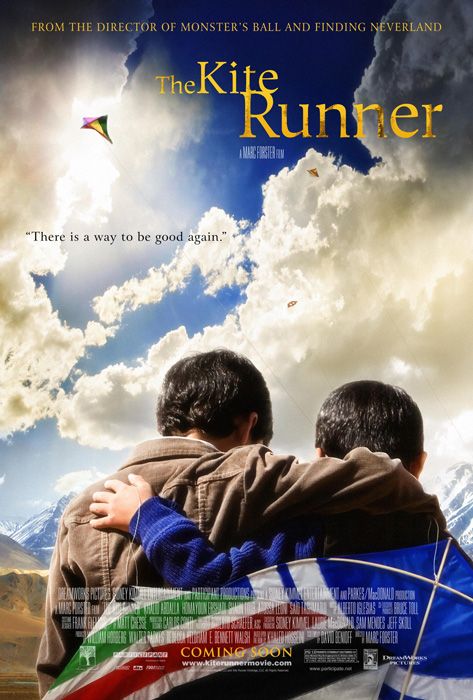
In the beginning of the book we see the complex relationship between Hassan and Amir. “The curious thing was, I never thought of Hassan and me as friends either. Not in the usual sense, anyhow. Never mind that we taught each other how to ride a bicycle with no hands, or to build a home made camera out of a cardboard box. Never mind that that we spent entire winters flying kites, running kites. Never mind that to me, the face of Afghanistan is that of a boy with a thin boned frame, shaved head, and lowest ears, a boy with a Chinese doll face perpetually lit by a hare lipped smile.
Never mind any of those things. Because history isn’t easy to overcome. Neither is religion. In the end I was a pashtun and he was a Hazara, I was Sunni and he was Shi’a, and nothing was ever going to change that. Nothing.”(25). This passage exhibits the complexity of Amir and Hassan’s relationship. Amir is saying that even though they are friends they cannot be. This is illustrated by the structure of the paragraph. After a certain point every single sentence begins with “Never mind that,” this structure implies that they are friends it is just socially unacceptable for them to be because of their different ethnic groups and religions. At the same time the paragraph would seem like a description of what Amir does with his best friend. It is also important that Amir identifies his country as Hassan the person he cannot say he is friends with.
This difference between Amir and Hassan is a large issue in the book. And takes place as many internal struggles for Amir. Amir partly wants to be equal with Hassan but at the same time he cannot help but revert to their ethnic differences.
“’What does that word mean?’ [Hassan asked]
‘which one?’ [replied Amir]
‘imbecile,’
‘you don’t know what that means?’ I said grinning.
‘nah Amir agha.’
‘But it is such a common word!’
‘still I do not know it.’ If he felt the sting of my tease, his smiling face did not show it.
‘Well everyone in school knows what it means,’ I said ‘lets see, ‘ ’Imbecile.’ It means smart, intelligent. I’ll use it in a sentence for you. ‘When it comes to words Hassan is an imbecile.”(29). This scene clearly illustrates how Amir sometimes acts superior. The diction of this passage also illustrates their relative positions, because the title “Agha” would only be a title for an adult not a friend. The content of the passage has a clear intent as well. The author’s intent was to show how Amir is quick to play a prank that he would have never play on an equal. This kind of treatment of the Hazara people is common in the book and illustrates the inequalities of the people. For example a similar event is when Amir describes how he tries to imitate Ali’s, Hassan’s father who has a crippled leg, walk. This is also treatment that would be unacceptable to any other adult. However despite this poor treatment of Hassan, Amir says that he feels guilty. This is because of Hassan’s trusting nature and Amir’s deceptive one.
Another theme that is explored is courage. Constantly in the book Amir tries to be brave and always regrets that others are brave and that he is not. “’Last chance, Hazara.’ Hassan’s answer was to cock the arm that held the rock. ‘Whatever you wish.’ Assef unbuttoned his winter coat, took it off, folded it slowly and deliberately. He placed it against the wall. I opened my mouth, almost said something. Almost. The rest of my life might have turned out differently if I had. But I didn’t. I just watched. Paralyzed… I had one chance to make a decision. One final opportunity to decide who I was going to be. I could stand up for Hassan – the way he’d stood up for me all those times in the past – and accept whatever would happen to me. Or I could run. In the end I ran. I ran because I was a coward. I was afraid of Assef and what he would do to me. I was afraid of getting hurt”(73-77). This passage takes place after Amir has won the kite-flying contest. Hassan goes to run the kite, but when he doesn’t return Amir goes to look for him. Finally Amir discovers that a gang of bullies who are out for revenge have corned Hassan. Amir is to scared to intervene and consequently Hassan gets raped. This cowardice has very adverse effects on Amir that was foreshadowed by the author “I opened my mouth, almost said something. Almost. The rest of my life might have turned out differently if I had”(73). This critical decision rocks Amir to his core. Mostly it is out of shame of his actions. This passage also illustrates how Amir can’t allow him self to openly be friends with Hassan and protect him, the way that Hassan protected Amir. Amir sufferers for his decision to not intervene in many ways, at the sound of Hassan’s name he cannot breath and often vomits from thinking about him. He also becomes an insomniac. The need to be brave and repent for his mistake haunts him when his cowardice fails him later. His father Baba prevents the rape of a lady passenger and is willing to die for decency. His wife is brave enough to tell him he deepest secret while he remains silent. Finally the chance for redemption presents its self when Amir returns to Afghanistan to find his nephew and take him to safety. In order to succeed he is challenged to a death match by Assef. “ I don’t know at what point I started laughing, but I did. It hurt to laugh, hurt my jaw, my ribs, my throat. But I was laughing and laughing. And the harder I laughed, the harder he kicked me, punched me, scratched me
‘WHATS SO FUNNY?’ Assef kept roaring with each blow spittle landed in my eye. Sohrab screamed.
‘WHATS SO FUNNY?’ Assef bellowed. Another rib snapped this time left lower. What was so funny was that, for the first time since the winter of 1975, I felt peace. I laughed because I saw that, in the hidden nook in the corner of my mind, I’d even been looking forward to this… I felt healed. Healed at last. I laughed”(289). Clearly in this passage Amir corrects his past errors. Being beaten to the edge of his life is the punishment he has desired because he should have taken it long before. He feels like this sacrifice for Sohrab is finally enough to remove his guilt.
Another theme in the book is Amir’s relationship with Baba his father. “In my head I had it all planned I’d make a grand entrance, a hero, prized trophy in bloodied hands… then the old warrior would walk to the young one, embrace him, acknowledge his worthiness. Vindication. Salvation. Redemption. And then? Well happily ever after, of course. What else?”(67). This passage is interesting because the structure illustrates Amir’s desires. He wants his father to think that he is worthy. The interesting thing is that he is unsure of what the result of his fathers love will be. All he knows is that his desires are pointed straight at his father.
Sunday, February 28, 2010
Q3-Q4 outside reading blog #1

In the kite runner by Khaled Hosseini, there are two parts to the book. The first is in Afghanistan and takes place from the monarchy to the soviet invasion. The second half takes place in America where Amir the main character and his father Baba get settled then Amir returns to Afghanistan which is now under the Taliban’s rule and tries to find his nephew and bring him out of Afghanistan.
The first section starts with characterization. We meet Hassan, immediately we are informed that Amir and Hassan have a deep bond because they both drank the same milk as infants. Even though they are friends they are very different. This inequality is brought to our attention very quickly. Amir says how at the end of the day he and Hassan part ways, Amir to the big white mansion and Hassan to the mud hut at the back of the house. This theme of inequality is mentioned a lot. For example Amir says, “history isn’t easy to overcome. Neither is religion”(25). He is referring to how he is a Pashtun and a Sunni and Hassan is a Hazara and a Shi’a. The author also demonstrates this by the fact that Hassan is illiterate. Amir often tries to feel superior by making fun of Hassan when he does not know what a word means. Also he tricks Hassan once, telling him the word imbecile means intelligent and then uses it in a sentence “when it comes to words Hassan is a imbecile.”(29). This trick is designed to make Hassan look stupid later when using the word incorrectly. It is this kind of cruel trick that clearly demonstrates the inequality because Amir would never had played such a nasty trick on anyone he regarded as an equal.
Another major theme in the book is Amir’s relationship with is father Baba. Amir characterizes Baba as being a very great man. He is strong, athletic, entrepreneurial, popular, successful and very brave. Baba is very disappointed in Amir. This is because he can’t relate to Amir. When Baba was a kid he played soccer, was good with a slingshot, could easily hold his own with the other boys and won the kite tournament. Amir likes to read books, is poor with the slingshot, is bad at soccer, is a coward and has never won the kite tournament. What Amir doesn’t know is that Hassan is his half brother and Baba approves of him but can’t openly be affectionate. This is demonstrated in many ways. For example Baba never forgets Hassan’s birthday and usually asks Amir to invite Hassan to a family outing. This relationship has caused problems. For example to win Baba’s love Amir feels like he has to win the kite contest at all costs and that goal blinds him to what is really important when Hassan, after running the last kite, gets cornered and eventually raped by Assef and his friends while Amir can only watch in horror.
The author has a lot of intent in his writing. A big example of this is the setting. In the first half of the book Afghanistan is depicted as a land worth loving. “He emptied the box and picked up a handful of dirt from the middle of the unpaved road. He kissed the dirt. Poured it into the box. Stowed the box in his breast pocket, next to his heart.”(121). In this scene Baba and Amir are about to leave Afghanistan and papa shows his great love for the country when he empties his stuff box and puts some of Afghanistan in it instead, next to his heart. When Amir returns however, Afghanistan does not seem like such a good place. Many are poor and Amir sees some men. One of them is selling his false leg to feed his family. Amir is also very surprised to see that one small district still has roofs on the houses.
Another intent of the author is to show that not all Afghans are crazy. Because of the media, it has become a bit of a stereotype that everyone from the Middle East is a terrorist and wants to blow up America. The author shows how this is not true at all by showing afghan culture to be interesting and not negative at all. The author also explains that not all Afghans are religious fanatics when Baba says “piss on the beards of all those self righteous monkeys … they do nothing but thumb their prayer beads and recite a book written in a tongue they don’t even understand… god help us all if Afghanistan ever falls into their hands” (17). Baba is telling Amir his opinion of the Taliban. That perspective is held throughout the entire book.
Sunday, January 31, 2010

“Black boy,” an autobiography by Richard Wright, is a blunt exposition to the Jim Crow South. The book starts when Wright burns down his family’s house and has to move down south. Adversity follows when Wright’s father abandons the family to be with another woman. Wright and his mother and brother try to survive in poverty. When his mother gets a paralyzing stroke, the family moves to Jackson to live with grandparents. Wright’s new goal is not only to survive but also to leave the south. Because he hated the religious indoctrination and racism he gets enough money to leave the south and to move to Illinois. Wright does not hesitate to show the inequity and racism of the Jim Crow South. His story shows the brutal unspoken apartheid that was not fully resolved till the 1960’s.
Wednesday, January 20, 2010
out side reading trailer

Outside Reading Trailer
Coming this summer to a theater near you. From the studio that brought you Native Son, The Outsider, and The Long Dream.
Directed by Steven Spielberg, The New York Times has rated it “ a must see.”
The renowned author Richard Wright's long awaited auto-biography “Black Boy” which has finally been adapted to film.
“Black Boy,” the story of one black boy and his struggle to survive and escape the racist Jim Crow south. With a childhood of desertion hunger and poverty and an adolescence of religious indoctrination, theft, cruelty and neglect; this is Richard wrights true story of escaping the white man’s world.
Starring
Tyler James Williams, and Chris Rock as Richard Wright,
Forest Whitaker as Nathan Wright his absent farther,
Viola Davis as Ella Wilson Wright the compassionate but crippled mother, and Meryl Streep as Margaret Bolton Wilson the religious grandmother who tries to save her grandson's soul.
JUNE 2010
Subscribe to:
Posts (Atom)